1505 S Post Rd, Midwest City, OK Mon-Sun: 7:00 AM - 7:00 PM
Licensed & Insured

Water Damage Restoration in Midwest City, OK With 24/7 Emergency Response

When a pipe bursts at 2 a.m. or a spring storm pushes water under your slab, the clock starts right away. In Midwest City's hot, humid climate, wet drywall and carpet pad can start growing mold within 24–48 hours, and water that's left sitting soaks into framing, subfloors and slab seams. Midwest City Water Damage Restoration Pros answers the phone 24/7, gets a crew rolling fast, and starts extracting and drying before secondary damage sets in. We also work directly with your insurance company, so you can put your energy into your family or business instead of the paperwork.

Most homes here went up fast in the 1940s–60s for Tinker Air Force Base families, so we know these slab-on-grade ranches, shallow crawlspaces and hall-closet water heaters well. We've learned where water hides in them. Every job gets moisture meters, thermal imaging and commercial drying equipment. Our crews cover the Original Mile, the Soldier Creek area and the Air Depot corridor, plus Del City, Nicoma Park, Spencer and Smith Village. Bring us a burst pipe, a sewage backup or a storm-soaked ceiling and we'll make it dry, documented and ready to rebuild.

  • 24/7 emergency water damage response
  • Direct insurance billing and claim documentation
  • Bonded and insured

Military families near Tinker, long-time Original Mile homeowners, landlords and local businesses count on us for fast response, honest answers and documentation their insurance companies accept.

Request Your Free Estimate

No obligation. Fast, honest quotes.

Your information is never shared.

Online Estimates
Onsite Service
Licensed & Insured
Customer Rated
Local Expertise

Why Midwest City Properties Need Fast, Professional Water Damage Restoration

Central Oklahoma throws almost every kind of water hazard at a building: torrential spring storms, hail, tornadoes, flash floods, the occasional deep freeze and long humid summers. Add in mid-century homes sitting on shifting clay and you get water damage that spreads fast and often stays hidden.

Storms, Floods, Freezes and Heat: Central Oklahoma's Climate

The Oklahoma City metro gets about 36 inches of rain a year, and a lot of it comes in May and June, which regularly bring 4–5+ inches each. That rain tends to fall in short, violent bursts that overwhelm gutters, window wells and low lots. Crutcho Creek, Soldier Creek and the North Canadian River corridor all flash-flood, and the May 31, 2013 storms showed how quickly streets and homes can fill. Hail and straight-line winds break shingles and skylights, so water gets into attics during the storm or the next one. Tornadoes like the 1999 F5 that crossed Del City and Midwest City left whole neighborhoods open to the rain. In February 2021, temperatures stayed below zero for days and burst pipes all over the metro. Summer highs of 95–100°F with high humidity mean wet materials can turn into a mold problem within 24–48 hours.

Mid-Century Homes, Aging Plumbing and Clay Soils

Midwest City was laid out in 1942 for Tinker workers. Most of its housing, like much of Del City, Spencer and Forest Park, is small single-story ranch and minimal-traditional homes on concrete slabs or shallow crawlspaces. Many still have original galvanized supply lines that corrode from the inside, cast-iron drains under the slab and clay sewer laterals that tree roots break into. Homes from the 1970s–90s may have polybutylene lines, which are known to fail. The red, clay-heavy soil swells when it's wet and shrinks in drought, and that movement cracks slabs and puts stress on under-slab plumbing, so slab leaks are common. Ductwork in the attic drips condensate in summer. Converted garages sitting on separate slabs let water in at the seams. Pre-1978 homes may contain asbestos and lead, so tear-out has to be done carefully.

Permits, Insurance and Safety Rules That Shape Every Job

Oklahoma doesn't issue a dedicated restoration license, so insurers look to the IICRC S500 and S520 drying and mold standards. Plain extraction and drying usually doesn't need a permit. Once a rebuild involves framing, electrical, plumbing or HVAC work, though, Midwest City, Del City and Oklahoma City require permits and inspections, and those trades need licenses from the Construction Industries Board. Homes in FEMA flood zones along local creeks may need floodplain review. Suspect asbestos materials should be tested before demolition, and EPA lead-safe rules apply to painted surfaces in pre-1978 homes. Most Oklahoma policies cover sudden pipe bursts but exclude gradual leaks and surface flooding, and many carry separate wind and hail deductibles. Moisture maps, photos and drying logs are often what decide a claim.

A Community Built Around Tinker AFB

Midwest City has about 58,000 residents and Del City about 21,000. Many are active-duty and retired military households, DoD civilians and aerospace workers, along with long-time seniors and a large number of renters. Landlords and property managers need fast coordination and clean paperwork. Families on PCS orders or with deployed spouses need someone who'll handle the claim from start to finish. Owners on a budget want straight answers about what their insurance will cover. Small businesses along Sooner Road, Town Center and near Rose State College need commercial water mitigation that gets them reopened quickly.

Know The Signs

Common Water Damage Problems in Midwest City Homes and Businesses

Most of the water losses we see around Midwest City trace back to a few local causes: aging mid-century plumbing, clay soils that move slabs, attic HVAC systems and central Oklahoma's violent weather. Here's what each one looks like, why it happens here, and how urgently it needs attention.

Burst Pipes from Hard Freezes

Emergency

Water freezes and expands inside a supply line until the pipe splits, usually in an attic, exterior wall, crawlspace or garage. Once things thaw, a pressurized line can release hundreds of gallons an hour into ceilings, walls and floors.

Why it happens here

Most homes around Midwest City were built for mild winters, not days below zero. Supply lines often run through uninsulated attics and exterior walls, and the corroded galvanized pipe in 1940s–60s homes is already thin. During the February 2021 deep freeze, pipes burst across the metro in a single night and restoration crews were booked solid. Converted garages and room additions often have plumbing in walls with little insulation. So when an Arctic front drops into central Oklahoma, Midwest City and Del City homes are among the first to fail.

Signs to watch for
  • Water running from a ceiling light fixture or vent
  • Sagging or bubbling ceiling drywall
  • Little or no water pressure during a freeze
  • Frost or bulging on exposed pipes
  • Sound of running water with all fixtures off
  • Sudden spike in the water bill
Local patterns

Burst pipes cluster in Original Mile ranches with attic plumbing, in garage conversions throughout Del City, and in crawlspace homes in Spencer and Nicoma Park. Two-story homes in Choctaw and Edmond see upstairs bathroom lines burst and flood the rooms below.

Our fix

Shut off the main and call us. We extract standing water, open the affected cavities, set up structural drying and coordinate a licensed plumber to repair the line.

Hidden Slab Leaks

Serious

A slab leak is a break in a supply or drain line underneath a concrete foundation. Water spreads beneath the flooring and wicks into baseboards, drywall and carpet pad, often for weeks before anyone notices.

Why it happens here

Midwest City sits on reddish clay with high shrink-swell potential. Each cycle of drought followed by heavy rain moves the slab, and that movement stresses old cast-iron drains and corroded galvanized or copper lines underneath. The earthquakes of the 2010s added more stress to rigid older piping. Because most local homes are slab-on-grade with no basement or crawlspace to inspect, slab leaks tend to be found late, after hardwood has cupped or the framing has stayed wet long enough to grow mold.

Signs to watch for
  • Warm spots on the floor
  • Damp or discolored carpet with no visible source
  • Hardwood or laminate cupping or lifting
  • Musty odor near baseboards
  • Water meter moving when nothing is running
  • New cracks in tile or the slab
Local patterns

Slab leaks are common in the post-war tracts around Tinker and Air Depot Blvd, in Del City's 1950s neighborhoods, and in Forest Park and Smith Village, where original under-slab plumbing has reached the end of its life.

Our fix

We use thermal imaging and moisture mapping to trace how far the water has spread, pull the affected flooring and dry the slab and wall bases while a plumber repairs the line.

Storm, Hail and Tornado Roof Intrusion

Emergency

Wind, hail or flying debris damages the roof, skylights or siding, and rain gets into the attic insulation, ceiling drywall and wall cavities. The damage often keeps growing with every storm until the building is dried in.

Why it happens here

Midwest City sits at the edge of Tornado Alley, and spring brings large hail and straight-line winds almost every year. Mid-century homes often have low-slope roofs that hold water once shingles are lost. The 1999 F5 and the 2013 Moore EF5 left thousands of homes open to the rain. After a big event, roofers are backed up for weeks, so water mitigation and emergency tarping can't wait.

Signs to watch for
  • Brown water stains spreading on ceilings
  • Wet or compressed attic insulation
  • Dripping around light fixtures or skylights
  • Missing shingles or dented vents after hail
  • Peeling paint high on walls
  • Musty attic smell after storms
Local patterns

Hail and wind claims spike in April through June all over Midwest City, Del City and Moore. Neighborhoods along the 1999 tornado path and newer Choctaw and Harrah subdivisions with large roof areas take heavy losses in big storms.

Our fix

Emergency tarping or board-up, removal of wet insulation and ceiling drywall, attic and structural drying, and photo documentation built to support your wind and hail claim.

Flash Flooding and Basement or Crawlspace Water

Emergency

Surface water from intense rain pushes into homes at doorways, slab edges, garage seams and crawlspace vents. Floodwater is considered Category 3 contaminated water and needs careful removal.

Why it happens here

Short, heavy May and June downpours overload storm drains along Crutcho Creek, Soldier Creek and the North Canadian River corridor. Lots here often barely slope away from the house, and converted garages sit on separate slabs with seams that let water through. Shallow crawlspaces have little room for drainage, so moisture wicks up into the subfloor. Most homeowners policies exclude surface flooding, which makes accurate documentation important for NFIP or private flood claims.

Signs to watch for
  • Mud or silt lines on walls or floors
  • Standing water in a crawlspace or garage
  • Soaked carpet along exterior walls
  • Sewage or fuel odors after flooding
  • Warped subfloor or doors that stick
  • Water in window wells or the rare basement
Local patterns

Low lots near Soldier Creek and Crutcho Creek, east Oklahoma City along the river corridor, and the older custom basement homes in Nichols Hills are most exposed. Rural Newalla and Jones properties can also have septic-contaminated floodwater.

Our fix

Category 3 extraction, removal of contaminated porous materials, antimicrobial treatment, crawlspace drying and complete documentation for your flood insurance claim.

Sewage Backups and Black Water

Emergency

Raw sewage comes back up through floor drains, toilets or tubs when a main line or lateral is blocked or broken. It carries bacteria, viruses and other pathogens, and anything porous it soaks has to be removed.

Why it happens here

A lot of Midwest City and Del City homes still drain through original clay sewer laterals and cast-iron pipe. Tree roots work into the clay joints and cast iron scales up from the inside until the line blocks. Heavy storms can also surcharge municipal lines. Under-slab cast-iron drains crack as the clay soil moves. Rural septic systems in Harrah and Newalla can back up when the ground is saturated.

Signs to watch for
  • Gurgling drains or toilets
  • Several fixtures backing up at once
  • Sewage odor in the home
  • Dark water rising from floor drains or tubs
  • Slow drains throughout the house
  • Wet spots in the yard over the sewer line
Local patterns

Backups are common in the Original Mile and post-war Del City homes with mature trees over old clay laterals. Spencer, Valley Brook and Forest Park rentals see repeat backups, and landlords often need fast turnaround.

Our fix

Protective containment, sewage extraction, removal of affected porous materials, disinfection, drying and odor control, with a licensed plumber scoping and repairing the line.

AC Condensate and Water Heater Overflows

Moderate

A clogged condensate line, rusted drain pan or failing water heater slowly leaks into ceilings, closets and flooring. The water often isn't noticed until stains or mold show up.

Why it happens here

Most local homes have air handlers and ductwork in the attic. During Oklahoma summers above 95°F, those systems produce gallons of condensate a day, and a clogged line overflows straight onto the ceiling below. Water heaters in older homes often sit in hall closets or garages, so a failed tank floods the interior right away. Insurers may call slow overflows 'gradual,' which is why early documentation matters.

Signs to watch for
  • Ceiling stains below the air handler
  • Water around the furnace or water heater closet
  • Rust on the water heater tank or pan
  • AC shutting off from a float switch
  • Damp carpet in the hallway
  • Musty smell when the AC runs
Local patterns

Hall-closet water heaters in Midwest City and Del City ranches and attic HVAC throughout the Sooner Rose area cause frequent claims. Upstairs laundry and HVAC in Moore and Edmond two-story homes leak through to the floors below.

Our fix

Pinpoint moisture mapping, controlled demolition of wet ceiling or flooring, targeted drying and documentation that shows the loss was sudden when that's the case.

Mold Growth After Unaddressed Leaks

Serious

Mold starts colonizing wet drywall, wood and carpet pad when water isn't dried properly. Indoors it shows up as staining, odor and visible growth, and it can spread through wall cavities and HVAC systems.

Why it happens here

Midwest City's summer heat and humidity are ideal conditions for mold, and wet materials can show growth within 24–48 hours. Slab leaks and attic drips are found late, so by then materials have been wet for weeks. Many mid-century homes have little ventilation in crawlspaces and wall cavities, and older asbestos-containing ceilings and joint compound make careless tear-out dangerous.

Signs to watch for
  • Persistent musty odor
  • Black, green or gray spots on walls or ceilings
  • Allergy symptoms that ease when you leave home
  • Peeling or bubbling paint
  • Warped baseboards
  • Visible growth behind furniture or in closets
Local patterns

We find mold most often in closed-up rental units, homes of seniors where a leak went unnoticed, crawlspaces in Nicoma Park and Spencer, and rooms below attic air handlers throughout Midwest City.

Our fix

We contain the area, test suspect materials before tear-out, remove mold-damaged materials under negative air, clean with HEPA filtration, treat with antimicrobials and fix the moisture source.

Minor Appliance and Fixture Leaks

Minor

Small leaks from dishwashers, washing machine hoses, refrigerator ice-maker lines, toilet supply lines or sink drains. They're usually contained, but they can still soak cabinets, subfloors and nearby drywall.

Why it happens here

Kitchens and laundry areas in older Midwest City homes are often tucked against interior walls on slab. Water runs under cabinets and vinyl flooring where nobody sees it. Many supply hoses are past their rated life, and rental turnover means appliances get swapped without new connectors.

Signs to watch for
  • Swollen cabinet bases
  • Loose or bubbling vinyl flooring
  • Damp drywall behind the washer
  • Stains under the sink
  • Water spots near the fridge
  • A faint musty smell in the kitchen
Local patterns

These are common in Tinker-area rentals, apartments near Rose State College and older kitchens in Del City and Warr Acres. We handle many of them for property managers between tenants.

Our fix

Moisture check, targeted extraction, drying of cabinets and subfloor with minimal demolition, and quick repairs so you're not left with a bigger problem later.

What We Do

Water Damage Restoration Services for Midwest City and the Eastern OKC Metro

We handle the whole job, from the emergency call through extraction, drying, mold prevention and rebuild. Every service follows the same approach: stop the water, measure it, dry it fast and document everything for your insurance carrier. Here's how each service fits the homes and businesses around Midwest City.

Specialty

24/7 Emergency Water Damage Service & Water Mitigation

We answer around the clock and dispatch a crew to stop the source, extract standing water and stabilize the property. Getting there fast is what keeps a water loss from turning into a mold or structural claim.

Our approach

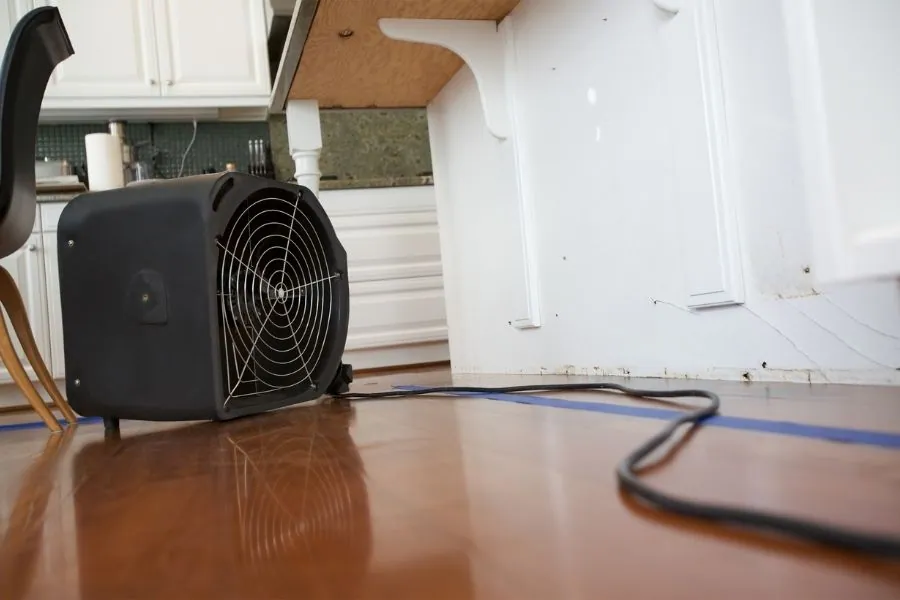
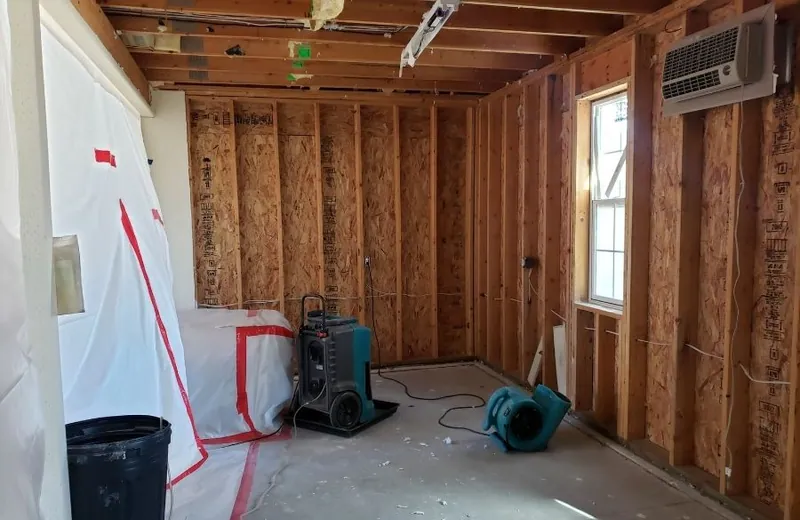
Truck-mounted and portable extractors, moisture meters, thermal cameras, emergency tarping and board-up, and immediate set-up of commercial air movers and dehumidifiers. We take photos and moisture readings from the first minute.

In Midwest City, OK

After a hailstorm or an overnight freeze, half the metro is calling at once. We stage equipment so Midwest City, Del City and the Tinker corridor get fast response even during regional events. That matters a lot to base families dealing with a loss on their own.

Best for

Burst pipes, overnight leaks, storm intrusion and any water event where every hour counts toward stopping mold and protecting your structure.

Specialty

Structural Drying & Dehumidification

We dry framing, subfloors, slab, drywall and cabinets to verified dry standards, not just until the surface feels dry. We log the readings every day until the target is reached.

Our approach

LGR dehumidifiers, high-velocity air movers, wall-cavity injection drying and containment chambers, with daily psychrometric readings and moisture mapping that follow IICRC S500 drying principles.

In Midwest City, OK

Slab-on-grade homes and shallow crawlspaces wick moisture into baseboards and bottom plates. In Midwest City's humid summers, outdoor air can't dry anything, so closed-system dehumidification is essential.

Best for

Any loss where water reached walls, flooring or framing, especially slab leaks and attic leaks found late.

Emergency Water Removal & Extraction

Fast removal of standing and absorbed water from carpet, pad, hard floors and crawlspaces.

Our approach

Truck-mounted extraction, weighted extraction tools for carpet, submersible pumps for crawlspaces and garages.

In Midwest City, OK

Essential after flash floods near Soldier and Crutcho Creeks and for garage-conversion floods in Del City.

Best for

Standing water from any source.

Water Damage Restoration, Repair & Residential Restoration

Complete restoration of water-damaged homes from mitigation through final finishes.

Our approach

Moisture-guided demolition, drying, then drywall, flooring, trim and paint matched to the existing finishes.

In Midwest City, OK

We know mid-century ranch construction in the Original Mile and Del City, and we work with landlords on rental turnovers.

Best for

Homeowners and landlords who want one company from start to finish.

Water Remediation & Emergency Water Damage Cleanup

Cleaning, sanitizing and deodorizing after water exposure.

Our approach

EPA-registered antimicrobials, HEPA vacuuming and odor control.

In Midwest City, OK

Important in humid summers, when bacteria and mold growth speed up.

Best for

Category 2 water from appliances, toilets and dishwashers.

Flood Damage Restoration & Storm & Flood Damage Restoration

Mitigation and cleanup after flash floods, tornadoes, hail and wind.

Our approach

Tarping, board-up, Category 3 extraction and full documentation for NFIP and wind/hail claims.

In Midwest City, OK

Built for spring storm season across Midwest City, Moore and Choctaw.

Best for

Storm-opened roofs and flooded homes.

Basement Flood Cleanup & Crawl Space Water & Sewage Cleanup

Pumping, cleaning, sanitizing and drying of below-grade spaces.

Our approach

Submersible pumps, crawlspace dehumidification, vapor-barrier removal and replacement.

In Midwest City, OK

For Nichols Hills basements and the shallow crawlspaces in Spencer and Nicoma Park.

Best for

Below-grade water and sewage.

Sewage Cleanup & Removal / Category 3 Black Water Cleanup

Safe removal of sewage and contaminated floodwater.

Our approach

Containment, PPE, removal of porous materials, disinfection and verification.

In Midwest City, OK

Common with the old clay and cast-iron laterals in Midwest City and Del City, and with rural septic backups.

Best for

Toilet, drain and septic backups or floodwater.

Water & Mold Remediation

Removal of mold growth and correction of the moisture that caused it.

Our approach

Containment, negative air, HEPA filtration and antimicrobials following IICRC S520 guidelines, with material testing before tear-out.

In Midwest City, OK

Critical in pre-1978 homes, where asbestos and lead may be present.

Best for

Late-found leaks and musty odors.

Carpet Water Damage Repair & Drying

We save carpet when it can be saved and replace pad when it can't.

Our approach

Extraction, float drying, pad replacement, sanitizing and re-stretching.

In Midwest City, OK

Common in slab ranches and rental units.

Best for

Clean-water carpet losses caught early.

Hardwood Floor Water Damage Restoration

Drying and saving cupped or wet hardwood.

Our approach

Floor drying mats, moisture monitoring and refinishing when it's needed.

In Midwest City, OK

Original oak floors in older homes and the fine finishes in Nichols Hills.

Best for

Solid and engineered wood floors.

Drywall & Ceiling Water Damage Repair / Ceiling Leak Repair & Water Stain Restoration

Removing and replacing wet drywall and restoring stained ceilings.

Our approach

Flood cuts, cavity drying, texture matching, stain-blocking primer and paint.

In Midwest City, OK

Attic condensate and storm leaks are the top causes locally. We test popcorn ceilings for asbestos before removal.

Best for

Ceiling stains and sagging drywall.

Water-Damaged Furniture Restoration

Drying, cleaning and pack-out of affected contents.

Our approach

Inventory, controlled drying and cleaning.

In Midwest City, OK

Helps base families and seniors protect heirlooms.

Best for

Wood furniture and keepsakes.

Water Damage Inspection & Assessment

Finding hidden moisture and documenting it for your claim.

Our approach

Thermal cameras, moisture meters and moisture maps.

In Midwest City, OK

Ideal for suspected slab leaks and pre-purchase checks.

Best for

Hidden leaks and insurance disputes.

Water Damage Reconstruction & Rebuild

Rebuilding after drying, through final finishes.

Our approach

Permitted work, with licensed trades handling plumbing, electrical and HVAC.

In Midwest City, OK

We follow Midwest City, Del City and OKC permit rules.

Best for

Losses that needed structural tear-out.

Burst Pipe & Water Leak Repair

Stopping active leaks and coordinating permanent repairs.

Our approach

Emergency shutoff, leak detection and licensed plumber coordination.

In Midwest City, OK

Frozen attic lines and failed galvanized piping.

Best for

Freeze events and pinhole leaks.

Appliance Overflow & Flood Cleanup

Cleanup after washer, dishwasher, water heater or fridge leaks.

Our approach

Extraction, cabinet and subfloor drying, sanitizing.

In Midwest City, OK

Hall-closet water heaters and upstairs laundry rooms.

Best for

Sudden appliance failures.

Commercial Water Damage Restoration

Mitigation designed to keep businesses open or get them reopened fast.

Our approach

After-hours work, phased drying and large-loss equipment.

In Midwest City, OK

Retail along Sooner Road and Town Center, offices and multifamily properties.

Best for

Businesses, churches and apartment owners.
Simple & Transparent

Our Water Damage Restoration Process

Every job follows the same five steps, so you always know what's happening, what comes next and what your insurance adjuster will see. Speed comes first in every phase.

Emergency Call & Rapid Dispatch

  • A real person answers and walks you through shutting off the water and power safely
  • We ask about the source, the affected rooms and your insurance carrier
  • A crew and equipment are dispatched to your address
  • You get an arrival window you can plan around

During freeze or hail events, we prioritize active leaks and Category 3 water across Midwest City and Del City first.

Immediately, 24/7/365

Inspection, Moisture Mapping & Documentation

  • Thermal imaging and moisture meters trace where the water has traveled
  • We classify the water category and class of loss
  • Photo and video documentation of all damage
  • Suspect asbestos or lead materials are flagged for testing before any tear-out

In pre-1978 Original Mile and Del City homes, testing happens before we cut drywall or pull flooring.

First hour on site

Extraction & Mitigation

  • Standing water is extracted from floors, carpet and crawlspaces
  • Wet pad, insulation and unsalvageable drywall are removed
  • Antimicrobial treatment where needed
  • Tarping or board-up for storm openings

Sewage and floodwater losses get containment and full PPE.

Same visit, typically 2–8 hours

Structural Drying & Monitoring

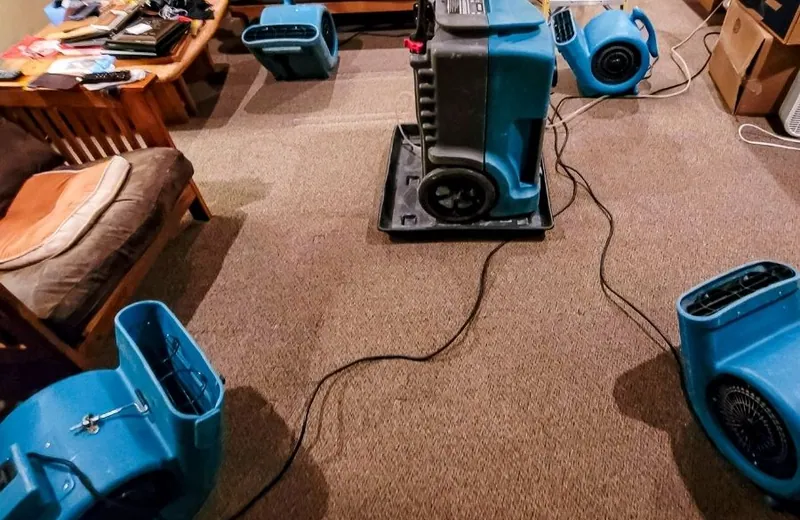
  • Commercial dehumidifiers and air movers are placed for your floor plan
  • Daily moisture readings and drying logs
  • Equipment adjusted until materials reach their dry standard
  • Logs are shared with you and your adjuster

In humid summers we keep the drying chamber closed. Slab and crawlspace homes may need extra time.

Typically 3–5 days

Insurance Billing, Repairs & Rebuild

  • We bill your insurance directly and communicate with your adjuster
  • Permits are pulled for structural, electrical or plumbing work
  • Drywall, flooring, cabinets and paint are restored
  • Final walkthrough with moisture verification

We follow Midwest City, Del City, OKC and Edmond permit rules and Nichols Hills contractor requirements.

Days to several weeks depending on scope
The Midwest City Water Damage Restoration Pros Difference

Why Midwest City Chooses Our Water Damage Restoration Team

24/7 Emergency Response Built for Oklahoma Storm Season

Water damage doesn't wait for business hours, and neither do we. Our phones are answered day and night, and crews are dispatched as soon as we understand your situation. That matters most in central Oklahoma, where a hailstorm, tornado or overnight freeze can flood hundreds of homes at once and demand jumps across the metro. We're based near Midwest City and keep equipment ready, so a burst pipe in the Soldier Creek area or a storm-opened roof in Del City gets attention before the 24–48 hour mold window closes.

Direct Insurance Billing and Claim-Ready Documentation

Insurance is usually the biggest worry after a water loss, and it's often unclear whether damage counts as sudden or gradual. Wind and hail deductibles and flood exclusions add more confusion. We bill your insurance directly and work with your adjuster, and every job comes with moisture maps, thermal images, photos and daily drying logs. That's the kind of evidence carriers look for. We won't promise to waive your deductible, which Oklahoma protects consumers against. What we will do is make sure the documentation shows exactly what happened.

Local Knowledge of Mid-Century and Tinker-Era Homes

Midwest City's housing has its own weak spots: galvanized supply lines, cast-iron drains under slabs, clay sewer laterals, hall-closet water heaters, attic air handlers and garage conversions on separate slabs. We know where water hides in these homes and how clay-soil movement drives slab leaks. We're also careful about asbestos and lead in pre-1978 construction. That local knowledge means fewer surprises, more precise demolition and a faster, more accurate drying plan.

Moisture Meters, Thermal Cameras and Commercial Drying on Every Job

Surface-dry isn't the same as dry. On every job we use moisture meters and thermal cameras to find water hiding behind walls, under flooring and in subfloors. We dry with commercial dehumidifiers and air movers, not box fans. Readings are logged daily until materials hit their dry standard. In Oklahoma's summer humidity, that measured approach is what stops mold from showing up weeks after the crew leaves.

Bonded and Insured for Your Protection

We're bonded and insured, so you and your property are protected while we work. That matters to homeowners, landlords, property managers and commercial owners who need a restoration partner they can rely on. When a rebuild involves plumbing, electrical or HVAC work, that work goes to properly licensed trades with the permits Midwest City and neighboring cities require.

Specialists in Water Damage, Not a Side Business

Water damage restoration is what we do. We handle burst pipes, slab leaks, floods, sewage backups, Category 3 black water and the mold that follows, plus the rebuild afterward. Having one team means you don't have to coordinate separate contractors for drying, cleanup and reconstruction, and nothing falls through the cracks between them.

Straight Talk, Transparent Pricing and Financing Available

Many of our neighbors are retirees, military families, renters and landlords keeping an eye on costs. We explain what's covered, what likely isn't and why before any work beyond emergency mitigation begins. For costs insurance won't cover, like deductibles, upgrades or gradual-leak repairs, financing is available. We'll give you clear numbers and real options, without high-pressure sales.

Trusted Locally

Trusted by Midwest City Homeowners, Landlords and Businesses

Military families near Tinker, long-time Original Mile homeowners, landlords and local businesses count on us for fast response, honest answers and documentation their insurance companies accept.

24/7
Emergency Response
20-Mile
Service Radius
18
Communities Served
Direct
Insurance Billing
BondedInsuredFinancing available
Where We Work

Water Damage Restoration Service Areas Around Midwest City

We're based in Midwest City and cover a 20-mile radius across eastern Oklahoma County and the OKC metro. That includes mid-century suburbs near Tinker AFB, growing family subdivisions and semi-rural acreages, each with its own water damage risks.

Midwest City & Tinker-Area Inner Suburbs

Midwest CityDel CitySmith VillageValley BrookSpencerForest Park

East & Rural Oklahoma County

ChoctawNicoma ParkHarrahNewallaJones

Oklahoma City Metro & North/South Suburbs

Oklahoma CityMooreEdmondNichols HillsThe VillageWarr Acres & Bethany

We serve properties within about 20 miles of Midwest City. If you're near the edge of that range, in Edmond, Bethany or rural Newalla for example, call and we'll confirm availability and arrival time. Not sure if we cover your area? Call (405) 467-1328.

Transparent Pricing

How Much Does Water Damage Restoration Cost in Midwest City?

Every loss is different, but costs follow predictable factors. Many sudden losses are covered by homeowners insurance after your deductible, and we bill your carrier directly. Here's what drives the price and what typical Midwest City projects cost.

Primary Factor

Water Category (Clean, Gray or Black)

Clean water from a supply line can often be dried in place. Gray water from appliances needs sanitizing. Category 3 water, meaning sewage or floodwater from Soldier or Crutcho Creek, means removing porous materials, setting up containment and wearing PPE, which can double the mitigation cost. The category is set by the source and how long the water sat, so a fast call can keep a clean-water loss from degrading into a costlier one.

Primary Factor

Affected Area and How Far Water Traveled

A contained kitchen leak and a burst attic line soaking three rooms are completely different jobs. On slab ranches, water wicks under flooring and into baseboards across several rooms. In two-story Edmond or Choctaw homes it drops through ceilings to the floor below. More square footage means more equipment, more drying days and more rebuild, so cost scales with the area.

Major Factor

Time Before Mitigation Starts

In Midwest City summers, wet materials can start growing mold within 24–48 hours. A leak handled the same day might need only drying. The same leak found two weeks later, like a slab leak or attic condensate drip, may need mold remediation, framing treatment and full drywall replacement. Waiting is usually the most expensive choice, and it can also complicate an insurance claim.

Secondary Factor

Hazardous Materials in Older Homes

Many homes in Midwest City, Del City and Spencer were built before 1978. Popcorn ceilings, joint compound, vinyl flooring and duct wrap may contain asbestos, and painted surfaces may contain lead. Testing typically adds a few hundred dollars. Positive results require regulated abatement before tear-out, which adds time and cost but protects your family.

Secondary Factor

Rebuild Scope and Finish Level

Putting back basic drywall, paint and carpet in a rental costs far less than matching site-finished hardwood, custom cabinetry or Nichols Hills-level trim. Permitted structural, electrical or plumbing work also adds cost. We price rebuilds to match your existing finishes so your insurance claim reflects replacement with like kind and quality.

Typical projectDetailsEstimated range
Washer hose or dishwasher leak1,200 sq ft Midwest City ranch, clean water, kitchen/laundry only, caught the same day$1,200 – $3,500
Frozen attic pipe burstDel City slab home, ceiling collapse in 2–3 rooms, drywall, insulation and carpet pad affected$5,000 – $15,000
Sewage backup from failed clay lateralCategory 3 water, 1–2 rooms plus hallway, flooring and lower drywall removed, disinfection and rebuild$4,500 – $12,000
Flash flood or storm intrusion with moldLow-lot home near Soldier Creek or storm-opened roof, multiple rooms, mold remediation and full reconstruction$15,000 – $50,000+

Financing is available for deductibles, uncovered repairs, gradual-leak damage or upgrades you choose during the rebuild. Professional drying usually costs far less than the mold remediation, rotted framing and denied claims that come from waiting. Fast mitigation also meets your policy's duty to prevent further damage.

Questions & Answers

Water Damage Restoration FAQs for Midwest City Property Owners

How fast should I call after water damage in my Midwest City home?

Call right away, ideally within the first hour or two. In central Oklahoma's heat and humidity, wet drywall, carpet pad and framing can start growing mold within 24–48 hours, and clean water can degrade into contaminated water the longer it sits. Shut off the main water valve if you can do it safely, turn off power to any wet areas, and move valuables out of the water. Your insurance policy also requires reasonable steps to prevent further damage, and fast professional mitigation is the strongest way to show you took them. We answer 24/7.

How much does water damage restoration cost in Midwest City?

Small clean-water leaks caught early typically run $1,200–$3,500. Burst pipes affecting several rooms often land in the $5,000–$15,000 range, and sewage backups usually cost $4,500–$12,000. Major floods or storm losses with mold and full reconstruction can exceed $15,000–$50,000. The biggest cost drivers are the water category, how far the water spread, how long it sat, and whether asbestos or lead testing is needed in a pre-1978 home. If the loss is covered, we bill your insurance directly, and financing is available for deductibles or uncovered work.

Will my homeowners insurance cover the water damage?

It depends on the cause. Most Oklahoma homeowners policies cover sudden and accidental losses like a burst pipe, a failed supply line or a water heater rupture. They usually exclude gradual leaks and surface flooding, and flood damage requires separate NFIP or private flood coverage. Storm damage may fall under a separate wind and hail deductible, sometimes a percentage of your dwelling coverage. We document every loss with moisture maps, thermal images, photos and drying logs, then work directly with your adjuster and bill the carrier, so the claim reflects what actually happened.

How long does it take to dry out a water-damaged house?

Extraction usually happens on the first visit, within a few hours. Structural drying typically takes 3–5 days, and we monitor and log moisture readings every day until materials reach their dry standard. Slab-on-grade homes, shallow crawlspaces, hardwood floors and losses that sat a while can take longer. Rebuild depends on the scope: a few days for drywall and paint, or several weeks if framing, cabinets, flooring or permitted trade work is involved. You'll get a timeline after the initial inspection.

Do I need a permit for water damage repairs in Midwest City?

Simple water removal and drying usually doesn't require a permit. Once repairs involve replacing framing, structural work, or electrical, plumbing or mechanical work, Midwest City, Del City, Oklahoma City, Edmond and other local cities require permits and inspections, and those trades must be licensed through the Oklahoma Construction Industries Board. Homes in FEMA flood zones along local creeks may need floodplain review. In pre-1978 homes, lead-safe practices apply, and suspect asbestos materials should be tested before demolition. We handle permit coordination as part of the rebuild.

Should I worry about asbestos or lead during tear-out?

In many older Midwest City and Del City homes, yes. Houses built before 1978 may contain lead paint, and mid-century popcorn ceilings, drywall joint compound, vinyl flooring and duct wrap can contain asbestos. Disturbing those materials while removing wet drywall or flooring can release hazardous dust. Before we cut or pull suspect materials, we flag them for testing. If results are positive, the work has to follow EPA, Oklahoma DEQ and Department of Labor rules. It adds a step, but it protects your family and keeps the project compliant.

How can I prevent water damage in my Oklahoma home?

Start with the local trouble spots. Insulate attic, crawlspace and exterior-wall pipes before winter, and drip faucets during hard freezes like February 2021. Flush your AC condensate line each spring and check the drain pan. Replace washer hoses every five years and water heaters near the end of their lifespan, especially in hall closets. Keep gutters clear and grade soil away from the slab before storm season. Watch your water meter for slab leaks. If your home still has galvanized or polybutylene lines, consider repiping.

What's the difference between water mitigation and water damage restoration?

Water mitigation is the emergency phase. It means stopping the source, extracting water, removing unsalvageable materials and drying the structure so damage doesn't spread. Restoration is the repair phase, when drywall, flooring, cabinets, trim and paint are rebuilt to their pre-loss condition. Insurers often handle the two phases separately, and mitigation has to happen quickly to satisfy your policy. We handle both, so the same team that dried your home documents the rebuild and works with your adjuster all the way through.

Find Us

Serving Midwest City, OK & Nearby

1505 S Post Rd, Midwest City, OK, 73130

Ready When You Are

Stop the Water Damage Now: Call Midwest City's 24/7 Restoration Team

Every hour water sits gives mold and structural damage more time to set in. Call now and we'll get a crew out, start drying and handle the insurance paperwork for you.

  • 24/7 emergency response, nights, weekends and holidays
  • Direct insurance billing and adjuster coordination
  • Moisture mapping, thermal imaging and daily drying logs
  • Commercial extraction and dehumidification equipment
  • Mold prevention and remediation when needed
  • Complete rebuild with permits handled
  • Bonded, insured, with financing available

Serving Midwest City, Del City, Choctaw, Nicoma Park, Spencer, Moore, Edmond, Oklahoma City and communities within 20 miles.

Active leak or flooding? Shut off the main water valve and power to affected areas if it's safe, then call us right away.

Bonded · Insured

Midwest City Water Damage Restoration Pros Free estimates across Midwest City, OK